

Author: Andi Mardika, Lc., MA Ph.D Candt
From 10 to 13 September 2025, I had the opportunity to undertake an academic visit to Al-Farabi Kazakh National University (KazNU), one of the most prominent higher education institutions in Kazakhstan. This visit offered valuable insights into the University’s institutional dynamics, academic culture, and research environment, while also illustrating how a modern research university positions itself within the global academic landscape without losing its local and national relevance.
Al-Farabi Kazakh National University demonstrates a high level of academic maturity, reflected in its systematic governance, well-structured academic programs, and strong commitment to quality assurance. The University’s consistent presence in international rankings, particularly its notable position in the QS World University Rankings, is not merely symbolic. Rather, it represents tangible outcomes of sustained efforts to enhance teaching quality, research productivity, and institutional management.
The integration of contemporary pedagogical approaches and scientific innovation is clearly evident in both classroom practices and research activities. Discussions with faculty members and university administrators revealed a shared commitment to building a supportive academic ecosystem that promotes scholarly excellence across disciplines, ranging from the natural sciences and engineering to the humanities and social sciences.
One of the most striking features of KazNU is its effective leadership and governance system. The University is managed with a clear strategic vision, grounded in principles of transparency and accountability. This governance framework creates a stable institutional environment that encourages innovation, interdisciplinary collaboration, and active international engagement. Such leadership practices play a crucial role in fostering academic excellence and ensuring long-term institutional sustainability.
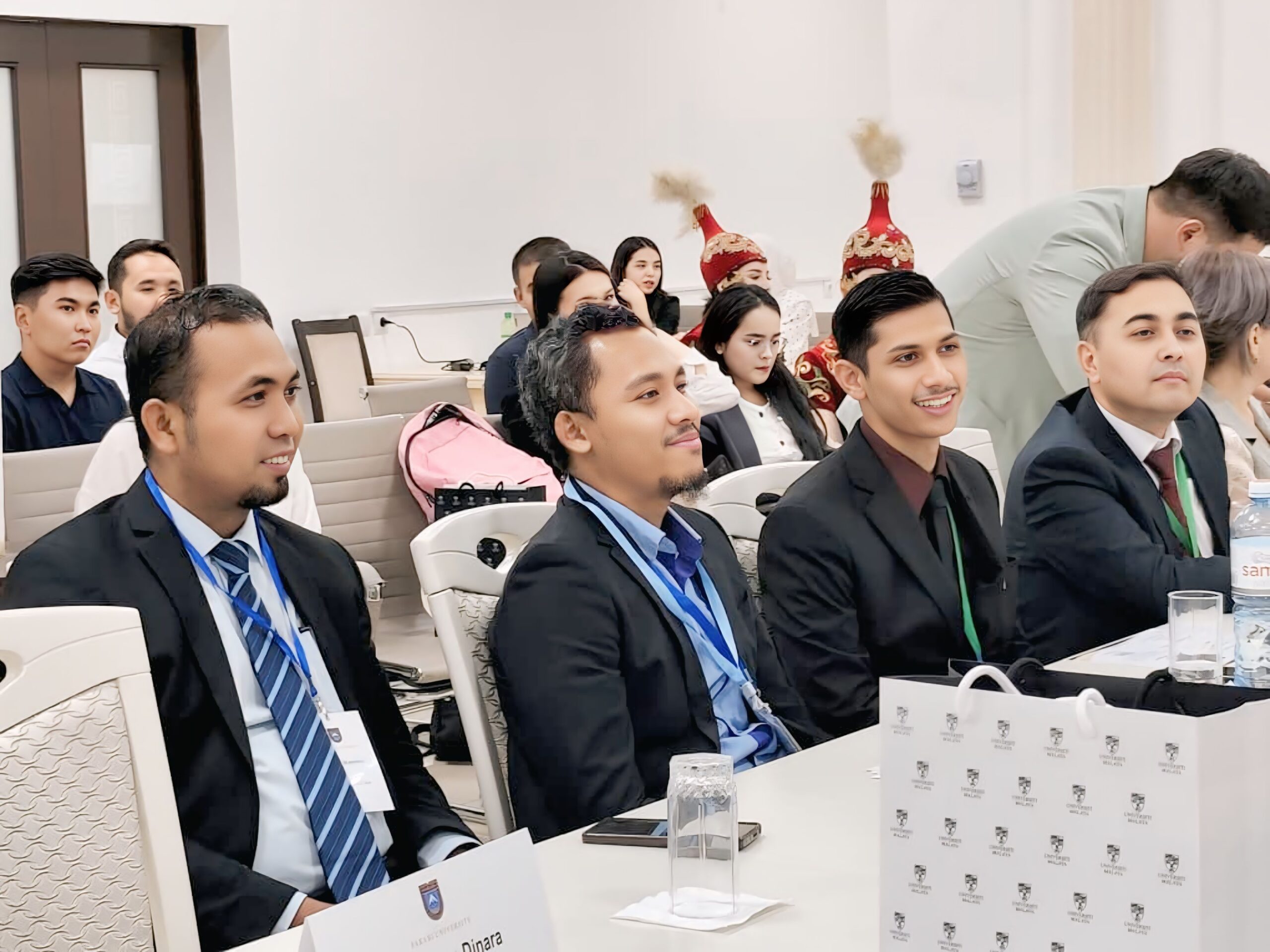
My visit to the Faculty of Philosophy and Political Science, particularly the Department of Religious Studies and Cultural Studies, further reinforced my positive impression of the University’s academic culture. Under the leadership of Professor Ainura Durbelinovna Kurmanaliyeva, the Department has developed a well-organized academic ecosystem that successfully balances teaching, research, and community engagement. The strong emphasis on methodological rigor, critical thinking, and interdisciplinary perspectives reflects a progressive academic orientation that is highly relevant to contemporary scholarship.
In the field of doctoral education, Al-Farabi Kazakh National University places significant emphasis on professional development, academic integrity, and scholarly communication. Doctoral candidates are trained not only as competent researchers but also as responsible members of the global academic community. Through structured seminars, close research supervision, international publications, and academic networking, doctoral students are equipped with the skills required to contribute meaningfully to global knowledge production.
My interactions with doctoral students revealed a high level of academic commitment and intellectual maturity. Among them, the scholarly activities of PhD candidate Yerimbet Ramzan deserve particular recognition. His research demonstrates strong analytical capacity, methodological precision, and professional academic communication. Young scholars of this caliber represent the future of the University’s research excellence and serve as valuable assets in strengthening its international reputation.
From a comparative perspective, this academic visit also offered important lessons for higher education institutions in Indonesia, particularly Islamic universities seeking to enhance their global engagement. The experience at Al-Farabi Kazakh National University highlights the importance of strategic leadership, institutional integrity, research-based teaching, and international collaboration in building a competitive academic environment within the increasingly interconnected global academic system.
In conclusion, my academic visit to Al-Farabi Kazakh National University was both intellectually enriching and professionally inspiring. The University stands as a strong model of academic excellence, effective governance, and international orientation. Its commitment to quality education, research innovation, and human resource development reflects a clear institutional vision aligned with global academic standards. I believe that sustained collaboration between Al-Farabi Kazakh National University and higher education institutions in Indonesia will contribute positively to the advancement of knowledge and the strengthening of cross-cultural academic relations.
(See official site: https://farabi.university/?lang=ru)
))**Lecturer at Sultanah Nahrasiyah State Islamic University,
Lhokseumawe, Indonesia